A salad bowl should do three things flawlessly: hold, toss, and present. Ugly bowls hide food. Weak bowls break under pressure. But the right bowl enhances the salad. It makes guests take interest in dining and displays the salad item to bring a fresh touch to the table. In this blog we will give you the tactical criteria, the material trade-offs, sizing rules, trend signals, and the best supply lines for maintaining a salad bowl collection that is practical and stylish.
Bowl Capacity
Capacity is the top priority. A bowl that’s too small forces extra trips and clumsy service. If it is too large, eating becomes difficult. Pick capacity by volume and by purpose. Tossing requires room. Composed salads require a compact stage. Family-style demands a big vessel.
Rim Design
Rim design matters. A wide, flared rim makes tossing ingredients really easy, making mixing very effective. A tight rim contains dressings and gives a composed plate structure. Lip shape controls motion. It controls spills. Choose the rim that matches how you serve.
Bowl Depth
A shallow wide bowl displays ingredients. Tall, narrow bowls concentrate heat and hold dressings. Depth affects aeration and cooling. It affects texture. It directs the eye.
Weight
Weight and balance are non-negotiable. Lightweight bowls feel cheap. Heavy bowls feel deliberate but not if they’re clumsy to carry when full. Balance keeps servers steady. A well-weighted bowl resists tipping and feels reassuring in the hand.
Cleaning Ease
Sanitation for pros. Pick non-porous materials for heavy service. Look for NSF or similar certifications. Dishwasher compatibility is a lifeline. Stains and retained odors are showstoppers in professional kitchens. You want surfaces that clean completely and quickly.
Appearance
Presentation is the final function. Bowls shape customer perception. The curvature, the base, the profile; these guide plating and garnish placement. A bowl that frames food well makes every plate look intentional.
Shop the Best Salad Bowls for Your Kitchen!!
| Material | Pros | Cons |
| Porcelain / Ceramic | Elegant. Clean lines. Great for front-of-house presentation. Microwave-safe (most). Holds temperature. | Breakable. Can chip. Heavy. Unglazed pieces can be porous. |
| Stoneware / Reactive Glaze | Rustic charm. Hides wear. Tactile, artisanal look. Durable for plated service. | Heavy. Potential crazing. Glaze limitations may affect microwave/oven use. |
| Glass (clear / tempered) | Modern. Shows layers and colors. Non-porous. Often dishwasher-safe. | Visible scratches. Can be heavy. Fragile unless tempered. |
| Stainless Steel | Indestructible. Lightweight relative to durability. Easy to sanitize. Stackable and professional. | Cold, reflective aesthetic. Not microwave-safe. Can dent. Less domestic warmth. |
| Bamboo / Wooden | Warm. Lightweight. Sustainable. Great for tossing and casual family service. | Hand-wash only. Can retain oils/odors. Requires maintenance to prevent cracking. |
| Melamine / Resin | Unbreakable. Light. Budget-friendly. Perfect for outdoor or high-traffic events. | Plastic look. Not microwave-safe. Can stain and wear over time. |
| Enamelware | Vintage charm. Lightweight and easy to clean. Good outdoors. | Chips reveal metal. Limited color and finish options. Not microwave-safe. |
| Composite / Porcelain-coated (stone-resin) | Combines weight and durability. Resistant to staining. Feels premium and holds up to service. | Variable quality by maker. Can chip. Pricier than basic alternatives. |
Individual bowls, 6–8 inches are well-suited for serving plated salad courses. They ensure controlled portions and deliver a neatly presented meal.
Small communal bowls are usually 10–12 inches. Side salads and appetizers are usually served in these.
Large tossing bowls, of 12–16 inch diameters (roughly 3–6 quarts) are the standard bowls. They are the most common for family-style service and large parties. Pick one that gives room to toss without smothering the greens.
Rule of thumb: one large tossing bowl per 4–6 guests for family-style. Two mid-size bowls for layered platters. If you run events, own at least one bowl that’s outrageously large. It will save time and look impressive on the pass.
Trends matter when food presentation is crucial for maintaining brand reputation.
Shape
Current trends favor bowls that tilt towards wide, and shallow bowls for a dramatic touch. Such a shape let garnishes breathe. They highlight the salad layers. Deep bowls persist for hearty and dressed preparations.
Textures and Finish
Latest finish trends include matte neutrals and reactive glazes. Matte surfaces reduce glare in photography and in this social media-driven dining culture, this is a huge positive. They also make the bowl feel modern. Reactive glazes create a unique appearance that has artistic appeal and is expensive.
Colors
Color trends swing toward earthy tones and deep jewel colors. These deepen the visual contrast of greens and toppings. White remains relentlessly popular because it makes food pop, but don’t mistake safety for sophistication.
Scale is shifting. Oversized bowls make drama for family-style service. Small, photogenic bowls dominate plated courses in tasting menus. Choose the scale that matches your service identity.
They Photograph Better
Social platforms reward color, texture, and layered composition. A bowl that showcases those elements does marketing for any restaurant or eatery. One viral photo can send boost reservation.
Shift towards Healthy Diets
More and more people are becoming health-conscious and eating plant-forward menus. Shared plates. Casual fine dining at home. Consumers want pieces that serve multiple roles: mixing, serving, storing. Versatility equals value.
Sustainability Awareness
Buyers pick materials that align with eco-friendly ethics: bamboo, small-batch ceramics, recycled glass. That story sells as much as the product.
Professionals need gear that endures. Restaurants want bowls that take heat, frequent washing, and rough handling without surrender. When form and function meet at scale, demand spikes.
Buy according to purpose. Your vendor choice must match your schedule, and serving size and branding appeal.
For professional kitchens and high-volume catering, go to the industrial suppliers. Some reputable ones that deliver in bulk at affordable discounts like rzbestceramic, Vollrath, and Cambro have a reputation and inventory. These suppliers understand sanitation and provide NSF-rated products with warranties and replacement policies. But before you start procurement, confirm lead times.
For stylistic appeal, shop from renown brands known for innovation. These makers often sell direct and through curated retailers. Expect a higher price-per-piece, but the superb finishes are worth paying for.
If you specialize in outdoor and casual service, check melamine and enamel makers. Companies like TableCraf deliver durable, colorful options. Test the weight and the feel. Many melamine lines look cheap. Some don’t. Find the good ones.
For sustainable and artisan picks, search local potteries and recycled-glass manufacturers. You’ll pay a premium, but your guests will feel the difference and your brand will reap the benefits.
During procurement, keep warranty and returns in mind. Demand written policies. Clarify replacement procedures for chipped or defective pieces. If you’re buying overseas, confirm import duties and shipping lead times. Don’t be surprised.
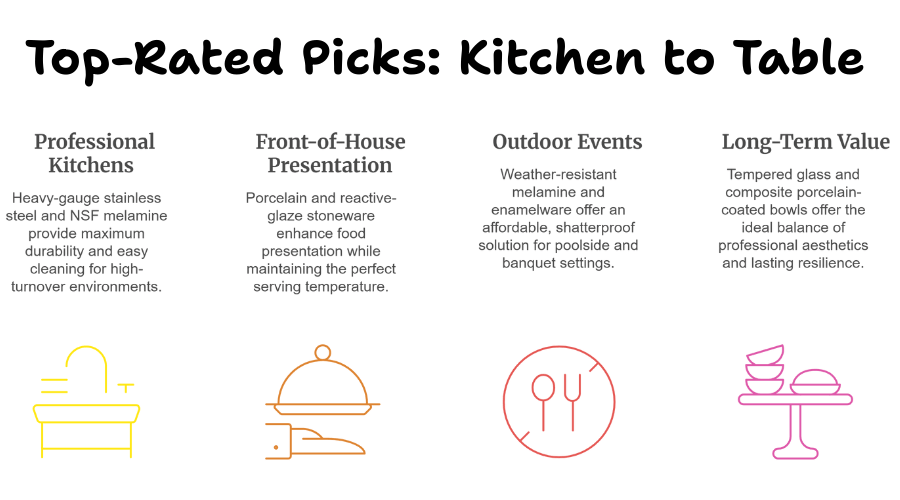
Top picks by use-case
For professional kitchens: where durability, sanitation, and turnover matter have the highest priority heavy-gauge stainless steel bowls and NSF-rated melamine tossing bowls are rated highly. They simplify cleaning a lot
For front-of-house presentation and plated courses: porcelain and reactive-glaze stoneware. They photograph well and hold heat or coolness. By using these bowls food presentation improves dramatically.
For outdoor banquets and poolside parties: premium melamine and enamelware work the best. They are weather-resistant and priced affordably.
For budget-conscious long-term value: solid mid-range stoneware, tempered glass bowls, or composite porcelain-coated options. These strike a balance between image and resilience.
Define your primary use. Is this for heavy daily service or occasional elegant dinners? Clarify this first.
Select capacity based on guest count and serving style. For food preparation that involves tossing ingredients a bigger size helps.
Choose material with an eye to cleaning protocols, durability needs, and desired finish. Prioritize NSF and dishwasher compatibility for professional use.
Test one piece. See it in your light. Try a toss. Try a scrape. Photograph it. If it fails any test, walk away.
Order backups. Broken pieces are inevitable during service. Plan for replacements and spares.
Pick bowls that match how you run service. And be completely clear on the shape and dimensions. The bowls should match the serving pace and also blend well with the table size. Our choice should be evenly balanced between design appeal and robust build. Once you have bought them your maintainence practices should be efficient for getting the most from the usage life of the bowls.
Salad vs Soup Bowl: What's best for you? Read this blog
Pick a bowl that gives the greens room to breathe and the dressing room to move. A 10–12 inch bowl (about 2–3 quarts) is your sweet spot for four. Big enough to toss without spillage. Small enough to look full and generous. Want to serve family-style with extras? Step up to 14 inches. Don’t skimp on space. Tossing needs elbow room.
Not without strict rules. Wood absorbs oils and moisture. It hides bacteria if you treat it casually. In restaurants you need non-porous surfaces that survive heavy sanitation. If you insist on wood for front-of-house warmth, use it for finished service only—not for prep. Seal it properly. Hand-wash and dry fast. Rotate and replace on a schedule. Otherwise, choose stainless or NSF-rated materials for back-of-house safety. Don’t gamble with customer health.
Melamine resists breakage. It looks handy. But it hates high heat. Avoid direct heat and never microwave melamine. Warm dressings are okay if they’re not piping hot. Hot steamy dishes or oven finishing can cause deformation and leaching risk. For warm salads, prefer tempered glass, porcelain, or stainless steel. Use melamine where durability and low-risk temperature meet: outdoor, buffet, heavy-traffic service.
A salad bowl should do three things flawlessly:
READ FULLMany kitchens obsess
READ FULLChoosing the preferred bowl to take your meals might sound easy, yet this real
READ FULL